What It’s Like To Live In Edgewater, NJ On The Hudson
Ever wonder what daily life in Edgewater actually feels like, beyond the skyline views and riverfront buildings? If you are thinking about moving to this part of Bergen County, you probably want more than a map pin and a few listing photos. You want to know how the town functions, how people get around, what the housing mix looks like, and what the tradeoffs are. This guide will help you understand what it is really like to live in Edgewater, NJ on the Hudson. Let’s dive in.
Edgewater sits along the Hudson River in southeastern Bergen County, with River Road serving as the town’s main north-south spine. Borough planning documents describe Edgewater as a place that evolved from an industrial riverfront into a mixed-use residential and commercial community. In plain terms, that means you get a waterfront setting with a more built-up, active feel than many people expect from a Bergen County borough.
It is also a compact place. The Census Bureau estimates Edgewater’s 2024 population at 15,116, with high population density on less than one square mile of land. That density shapes the lifestyle in a big way, from the housing stock to the commute options to the rhythm of daily errands.
Edgewater is also notably diverse. Census estimates show that 49.6% of residents were foreign-born, and 51.9% of people age 5 and older spoke a language other than English at home. For you as a resident, that often shows up in the town’s energy, its mix of people, and its everyday commercial life.
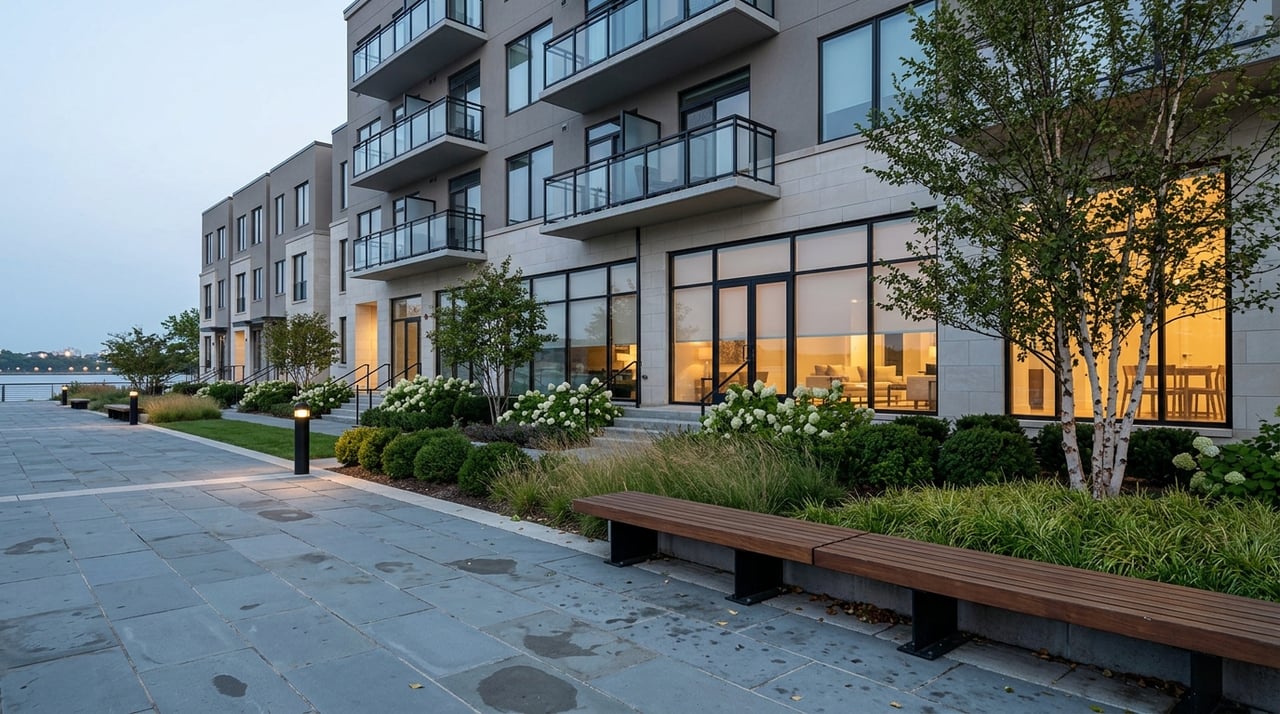
If you picture Edgewater as a quiet little riverside town, that is only part of the story. The borough’s public spaces and daily routines are strongly tied to the waterfront corridor. This is a place where parks, pathways, residential buildings, retail centers, and transit options all sit close together.
The borough maintains open spaces including Veterans Field, Viaduct Park, Edgewater Marina Park & Ferry Landing, and Memorial Park. The Hudson River Waterfront Walkway is also treated as a formal public asset, not just a casual path. That matters because it makes the waterfront part of everyday life, not just something you visit once in a while.
For many residents, that means your routine may include a walk along the river, a quick stop at a retail center, and a commute connection all in the same area. Edgewater feels less like a traditional downtown town and more like a compact waterfront district built around convenience.
Retail in Edgewater is concentrated in major nodes rather than a classic Main Street setup. Borough planning materials identify Edgewater Commons as a shopping center and City Place at The Promenade as a mixed-use development with commercial, office, residential, and hotel components. Borough records also identify Mitsuwa Marketplace on River Road and Tommy’s Tavern & Tap at The Promenade.
That setup gives you practical convenience. Instead of relying on a walkable downtown grid, many residents use the River Road corridor for shopping, dining, and daily needs. It is functional and efficient, but it also reinforces the fact that Edgewater is a denser, more corridor-based community.
For many buyers and renters, commute access is one of Edgewater’s biggest draws. If your work or routine keeps you connected to New York City, Edgewater offers several ways to get there without relying on just one option. That flexibility is a big part of the appeal.
NY Waterway currently advertises weekday ferry service from Edgewater to Midtown, Brookfield Place, and Pier 11/Wall Street, with morning and evening commute service and connecting shuttles. The borough’s shuttle information also shows local stops at places such as City Place, The Commons by River Club, Hudson Harbour, and Edgehill. In other words, the ferry system is tied into the local layout rather than standing alone.
NJ Transit also serves Edgewater with New York-bound bus routes including the 156, 158, and 159. Current schedules show service from Edgewater stops such as River Road at Route 5/Marina and River Road at Old River Road. Depending on where you live in town, your commute may be ferry-first, bus-first, or a mix of driving and transit.
The same features that make Edgewater convenient also create tradeoffs. Borough planning documents describe River Road as the main spine, and the town is highly built up. This is not the kind of place designed around wide-open suburban spacing.
If you are considering Edgewater, it helps to think of it as transit-rich waterfront convenience rather than quiet suburban sprawl. That framing will help you decide if the lifestyle fits what you want day to day.
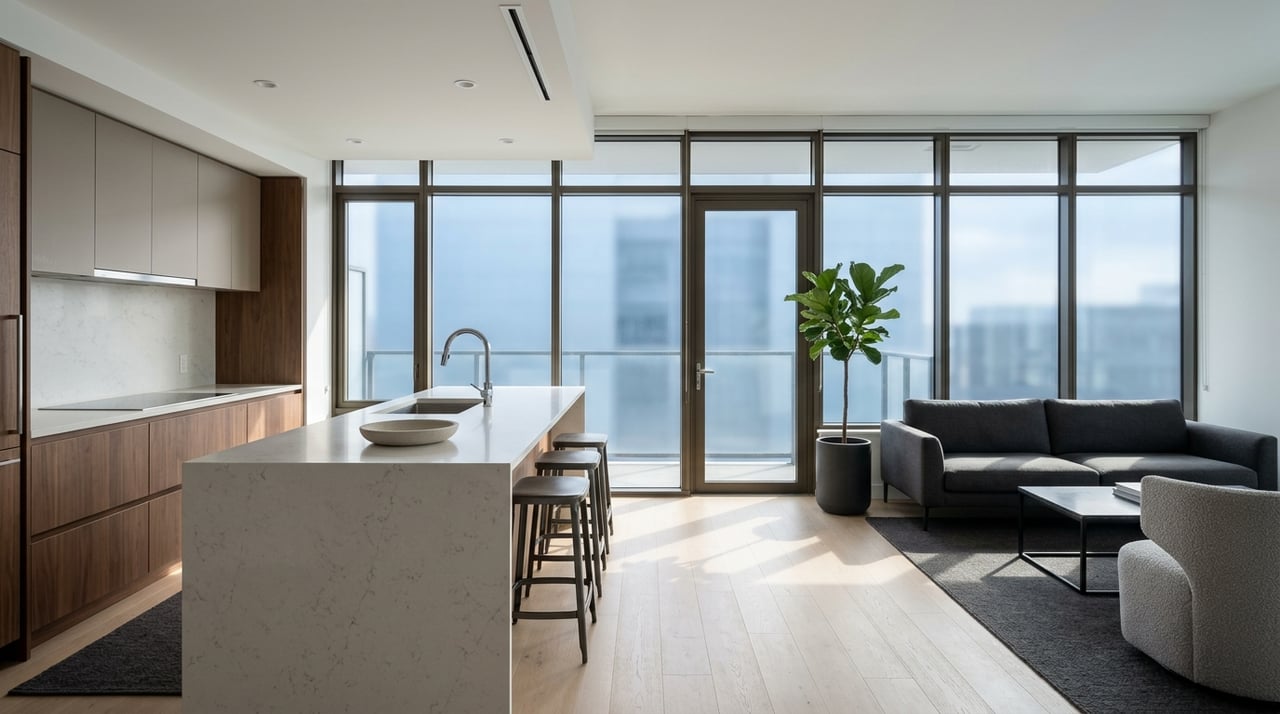
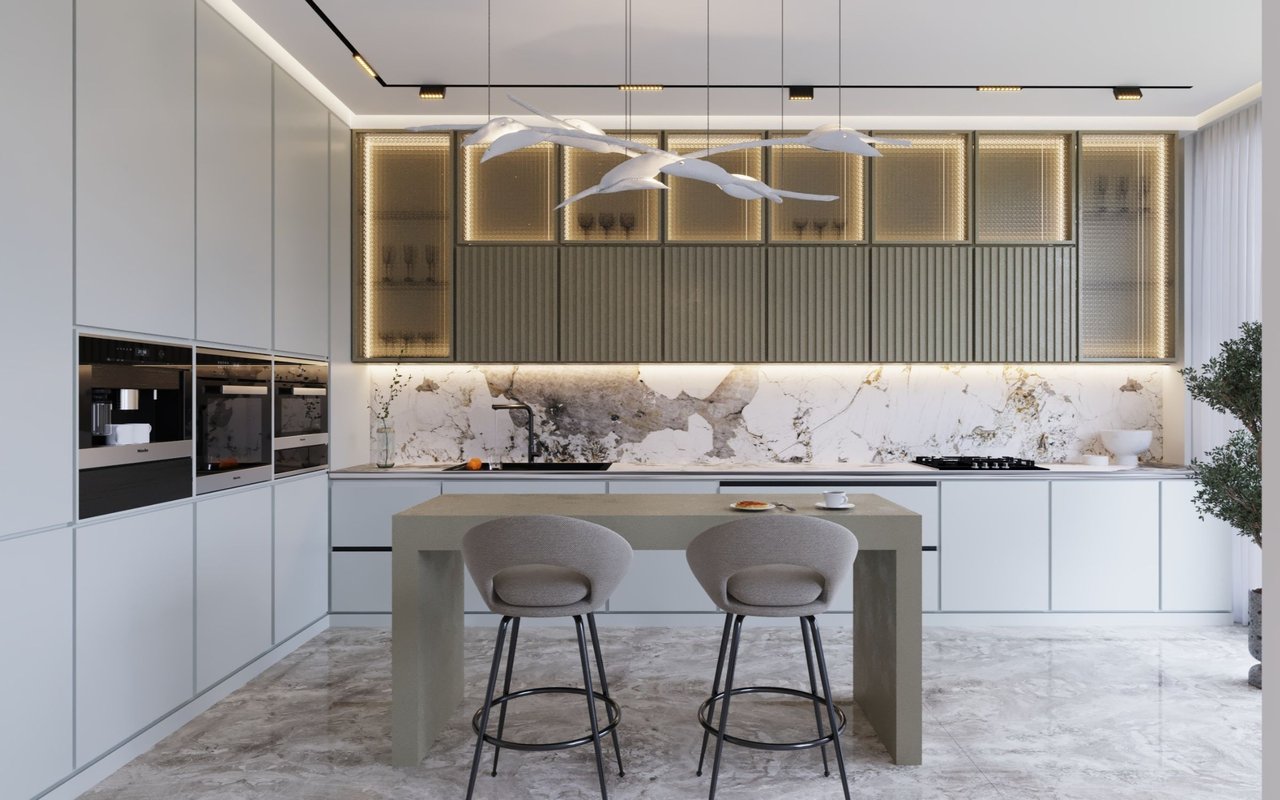
One of the most useful things to know about Edgewater is that the housing market is not one-note. Official planning documents describe a mix of single-family homes, duplexes, townhouses, mid-rise multifamily buildings, and high-rise multifamily buildings. That range gives buyers, renters, and investors more than one path into the market.
In practice, that means you can find lower-scale residential pockets inland and denser riverfront housing closer to the main corridor. Recent planning documents also show the variety in real projects, from townhouse-style residential development to smaller multifamily buildings and taller waterfront towers. If you are comparing Edgewater with more traditional Bergen County towns, this is one of the biggest differences.
The honest answer is both, but with a clear tilt toward multifamily living. Census QuickFacts report an owner-occupied housing unit rate of 39.8%, a median owner-occupied home value of $715,700, median gross rent of $2,579, and median monthly owner costs with a mortgage of $3,935. Household size is also relatively small at 2.04 people per household.
Those numbers support what many people notice on the ground. Edgewater is more renter-heavy, more condo-and-apartment-oriented, and more vertical than a classic single-family Bergen County town. That does not mean houses do not exist here. It means the overall housing story is shaped more by attached and multifamily options than by detached-home neighborhoods alone.
Edgewater can work well if you want a Hudson River setting, quick access to New York City, and a home base with modern multifamily options and nearby retail convenience. It can also make sense if you prefer a more compact lifestyle where transit, errands, and recreation sit close together. For some buyers, that combination checks a lot of boxes.
You may especially appreciate Edgewater if you are comparing it with other commuter-friendly Gold Coast communities and want a place that feels active and connected. The mix of ferry service, bus access, waterfront parks, and varied housing types gives you options. That matters whether you are buying your first condo, moving from the city, searching for a townhouse, or evaluating a rental or investment opportunity.
Before choosing Edgewater, it helps to be clear about your priorities. Ask yourself:
If your answers lean yes, Edgewater may feel like a strong match. If you want a quieter, more spread-out environment centered mostly on detached homes, you may want to compare it carefully with other Bergen County towns.
What makes Edgewater distinct is not just the riverfront. It is the combination of shoreline setting, multiple commute options, concentrated retail, and a housing stock that ranges from houses to high-rise living. That combination gives the borough a very specific identity within Bergen County.
For you, the biggest advantage may be how much is packed into a small footprint. Waterfront parks, the ferry landing, the River Road corridor, and mixed-use developments all shape a lifestyle that feels efficient and connected. The main question is not whether Edgewater has amenities. It is whether its denser, faster-moving rhythm fits the way you want to live.
If you are weighing Edgewater against Fort Lee, Ridgefield, Tenafly, or another nearby market, the best next step is to compare the tradeoffs clearly. A data-informed look at commute style, housing type, pricing, and everyday lifestyle can make that decision much easier. If you want help sorting through Edgewater or other Bergen County options, reach out to Tony J Lee for thoughtful guidance tailored to your goals.
Stay up to date on the latest real estate trends.
Whether you’re buying your first home, selling a trust property, or navigating a probate sale, my goal is always the same: to provide honest guidance, strong advocacy, and a smooth experience from beginning to end. Real estate is about people, not just properties. I would be honored to help you take your next step.