Edgewater, NJ Condo And Townhome Market Guide For Buyers
If you are thinking about buying a condo or townhome in Edgewater, the first surprise is usually the price and the second is how much the building matters. This is not a market where you can judge value by square footage or list price alone. You need to understand inventory, HOA health, reserve funding, and the local closing steps that can affect your timeline. Let’s dive in.
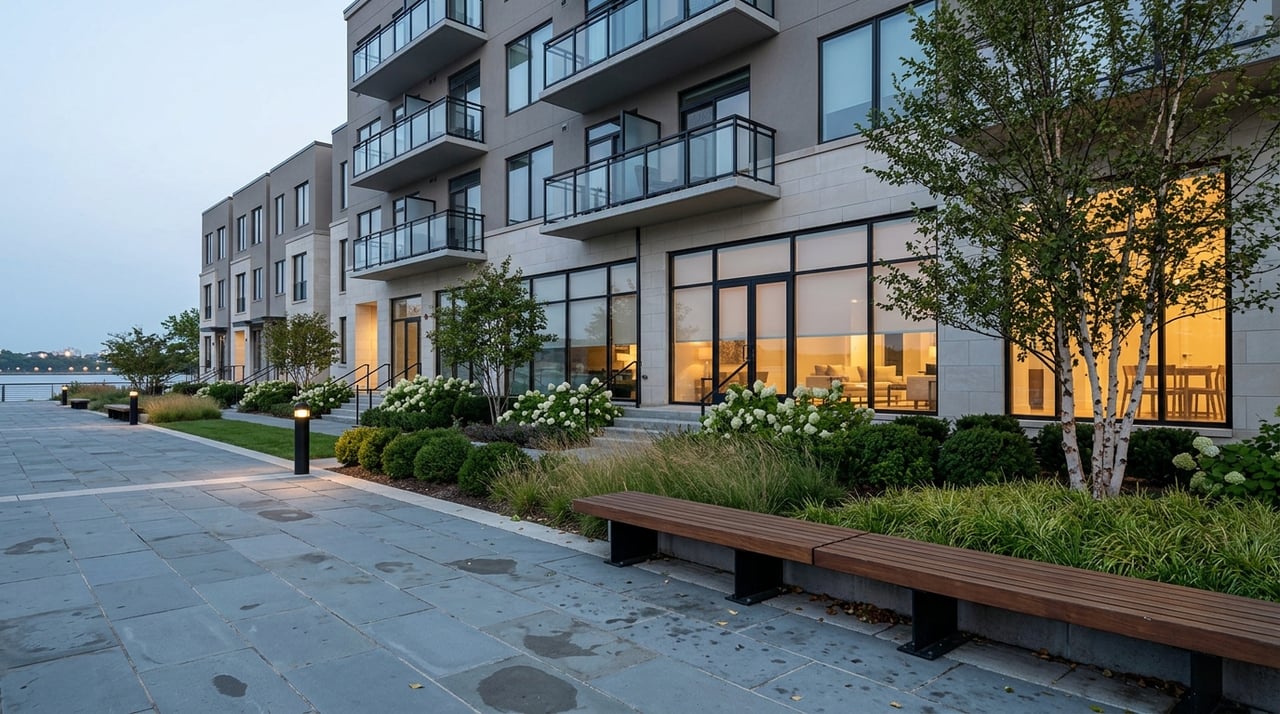
Edgewater has a very mixed housing stock for a compact Hudson River borough. The borough’s housing element describes a mix of single-family homes, duplexes, townhouses, mid-rise multifamily, and high-rise multifamily housing, along with NJ Transit bus service and ferry service to Manhattan.
For you as a buyer, that means one important thing: Edgewater is highly building-specific. Two homes with similar size and price can feel very different once you compare the building age, amenities, parking setup, monthly dues, and reserve strength.
Edgewater also sits in a premium part of the North Jersey market. Redfin’s March 2026 data shows a median sale price of $710,000, median days on market of 119, and a sale-to-list ratio of 97.9%.
That pricing is well above the New Jersey statewide townhouse and condo median sales price of $415,000 reported for Q1 2026. In simple terms, when you buy in Edgewater, you are often paying for location, building quality, and lifestyle convenience, not just the unit itself.
Current listing data shows that condo inventory is much deeper than townhome inventory. Zillow’s snapshot shows 62 condo or apartment listings in Edgewater, compared with 15 townhome listings.
Visible condo asking prices currently range from $199,000 to $1,350,000. Many active listings appear to cluster between $400,000 and $900,000, which is a useful working range if you are trying to set realistic expectations.
That range reflects the variety in Edgewater’s housing stock. Some buildings are elevator properties with more amenities, while others are simpler communities where the monthly cost structure may look very different.
Townhomes are a smaller and more expensive segment in Edgewater right now. Visible asking prices range from $443,000 to $2,995,000, with many current examples sitting around $1.3 million to $1.9 million.
For buyers, that usually means fewer choices and more pressure to evaluate each opportunity carefully. Because inventory is thin, pricing can stay firm on the best townhome listings, especially when layout, parking, and condition are strong.
The right choice depends on how you want to live and how you want to budget. In Edgewater, that decision often comes down to tradeoffs between convenience, privacy, and monthly carrying costs.
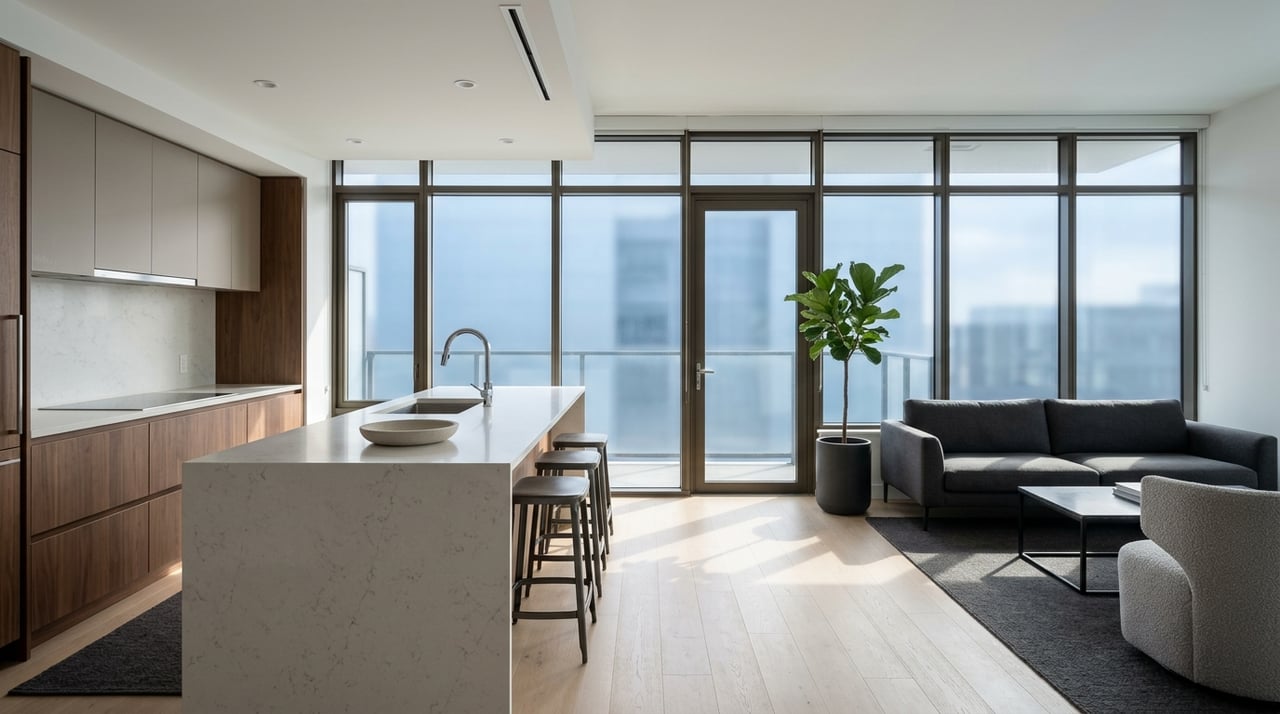
A condo may be the better fit if you want:
Many Edgewater condo options are in river-adjacent or elevator-style buildings such as The Promenade, Hudson Park, Somerset Lane, and other River Road addresses. In these buildings, the unit is only part of the story. The association’s finances and maintenance standards matter just as much.
A townhome may be the better fit if you want:
Townhome inventory is spread across smaller attached-home pockets like Valley Place, Myrtle Avenue, Hudson Cove and Terrace, Undercliff Avenue, Oakdene Terrace, Marquis Court, Vela Way, and River Road. Because these communities are smaller and more limited in number, broad market averages are often less useful than direct, property-by-property comparisons.
If you are choosing between Edgewater, Fort Lee, and Cliffside Park, the numbers help explain the tradeoffs. Redfin’s March 2026 data shows Edgewater’s median sale price at $710,000, compared with $390,000 in Fort Lee and $522,500 in Cliffside Park.
Edgewater also leads on price per square foot at $490, versus $446 in Fort Lee and $393 in Cliffside Park. That tells you Edgewater is not just a little more expensive. It is operating in a meaningfully higher pricing tier.
Inventory also differs by town. Fort Lee currently has much deeper condo supply, with 155 condo listings, while Edgewater has 62. Edgewater, however, currently offers more townhome choice than Fort Lee or Cliffside Park.
For you, that matters because supply affects leverage. More inventory can create more comparison points and sometimes more negotiation room. Lower inventory often makes the best listings less flexible, especially in a market where building-by-building differences shape value.
Edgewater is somewhat competitive, but it is not a market where every listing turns into a bidding war. Redfin reports that homes receive about two offers on average, sell in roughly 119 days, and typically sell for about 1% below list price.
Only 7.7% of homes sold above list price, and 8.5% had price drops. At the same time, hot homes can still go pending in about 56 days.
That creates a two-speed market. Fresh, well-priced, well-presented listings can move quickly, while stale listings may give you room to negotiate.
When you evaluate a condo or townhome in Edgewater, ask yourself which category it falls into:
This kind of analysis matters more in Edgewater because inventory is segmented by building type and association quality. A slower listing is not always a deal, but it may signal an opening on price, repairs, or credits.
In Edgewater, HOA review is not just a routine box to check. It is one of the most important parts of your purchase.
New Jersey’s Department of Community Affairs says the 2024 structural integrity law strengthened inspection and reserve funding requirements for condos and co-ops. The DCA FAQ states that planned real estate developments must complete and fund a capital reserve study, and that the study must include a proposed 30-year funding plan prepared or overseen by a qualified reserve specialist, licensed engineer, or architect.
For you, that means reserve planning is not a side issue. It is central to understanding whether today’s monthly dues are realistic and whether future costs may be waiting around the corner.
According to the DCA FAQ, reserve studies should address:
The same guidance notes that common-area capital assets may include roofs, elevators, pools, parking areas, hallways, exterior walls, balconies, storage spaces, patios, and landscaping. In practical terms, amenity-heavy elevator buildings often deserve more fee and reserve scrutiny than smaller, lower-amenity communities.
Edgewater’s housing element says 59% of the borough’s housing units were built between 1990 and 2009. That matters because many communities are now old enough to be entering recurring capital repair cycles, even if the property still looks modern on the surface.
A building can show well and still be approaching major spending needs. Roof systems, elevators, exterior work, parking areas, balconies, and other shared components can create real future costs, and those costs are shared by owners.
This is why a polished lobby or attractive amenities should never replace document review. In Edgewater, appearances are helpful, but the numbers behind the building are what protect your budget.
If you are serious about a condo or townhome, your due diligence should go beyond the listing sheet. New Jersey legislative language for common-interest communities says purchasers should request governing documents, the latest capital reserve study, pending litigation information, notices or orders, ADR and rules procedures, delinquency and foreclosure rates, and insurance coverage.
A practical buyer checklist usually includes:
These are not small details. They can affect your monthly payment, resale flexibility, and risk exposure after closing.
Edgewater adds local requirements that buyers should understand early. The borough requires a Certificate of Continued Occupancy before a sale or purchase, and it states that all sales and rentals must obtain a Certificate of Compliance inspection with the Fire Prevention Bureau before the new owner or tenant moves in.
That means your closing timeline is not just about the contract, mortgage, and inspection. Local municipal requirements can also shape the path to closing and move-in.
If you are planning around a lease ending, a rate lock, or a coordinated sale and purchase, this timing matters. It is one more reason to stay organized and proactive from the start.
In Edgewater, the cleanest value test is usually not the sticker price. It is the all-in monthly payment.
When you compare options, look at the full picture:
This approach helps you compare a lower-priced unit with high dues against a higher-priced unit with stronger financials or lower monthly overhead. In a market where Edgewater runs above nearby towns on both sale price and price per square foot, this kind of math can keep you from overpaying for the wrong type of value.
If you want to buy well in Edgewater, keep your search disciplined. Start with your payment comfort zone, then narrow by building type, reserve strength, parking needs, and commute preferences.
From there, compare each property through a building-specific lens, not just a neighborhood lens. In Edgewater, better decisions usually come from combining real-time market data with careful document review and a clear understanding of long-term carrying costs.
If you want a calm, data-driven way to compare Edgewater condos and townhomes, Tony J Lee can help you evaluate the numbers, the buildings, and the tradeoffs so you can move with confidence.
Stay up to date on the latest real estate trends.
Whether you’re buying your first home, selling a trust property, or navigating a probate sale, my goal is always the same: to provide honest guidance, strong advocacy, and a smooth experience from beginning to end. Real estate is about people, not just properties. I would be honored to help you take your next step.